Category: news

  • A (fruit) fly in the oinment of Pruneti organic olive oil

    A (fruit) fly in the oinment of Pruneti organic olive oil

    Nina Mukerjee Furstenau's avatarPlated

    By Claire Lardizabal

    SAN POLO in CHIANTI, Italy—The olive fruit fly, Mosca Olearia, devastated half of the Pruneti’s olive grove and led a decrease in overall olive oil production due to unfavorable weather in 2014.

    The Azienda Agricola Pruneti is located in the rolling hills of Chianti outside of Florence. The Pruneti family has been producing olive oil since the 19th century, and currently maintains 28,000 olive trees on 150 acres of land.

    The grandfathers of the clan used a hot-press method that was easier but quality had to be sacrificed for quantity. Now, it is the other way around. Olive oil is cold-pressed at 27°C through stainless steel machinery. The cold temperature yields better quality because it will preserve the olive’s vitamins.

    Last year’s heavy rains and humidity created a breeding ground for the fruit fly that then ate olive crops and contaminated olive crates, cutting the estimated…

    View original post 114 more words

  • For the love of cheese

    For the love of cheese

    Nina Mukerjee Furstenau's avatarPlated

    By Claire Lardizabal
    _DSC0045

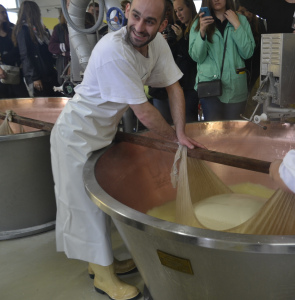
    FLORENCE, Italy – Marco Cavani began the San Michele Parmigiano Reggiano factory eight years ago with his wife, Samuela. Samuela grew up making cheese and brought her knowledge to the table when they began their business.

    The Cavani’s Parmigiano Reggiano products are labeled DOP (protected designation of origin). The label represents authenticity and distinguishes it from imitators. In Parma, an inspector comes to businesses like the Cavani’s, and inspects every wheel to ensure quality product true to the region.

    When we entered the facility, we were asked to cover our feet with electric blue shower caps to prevent dragging in contaminants. Steam was already rising from 1,000 liters of milk in each of three deep, copper vats. After reaching 17°C, rennet, an enzyme that causes milk to become cheese, was added and contined to heat the milk until it reached 27°C. Even though the Cavani’s used modern…

    View original post 245 more words