The movie Fantastic Beasts and Where to Find Them, scheduled to release November 16 next year, is every Harry Potter fan’s infatuation continued. Adapted from a book based off one of Harry’s textbooks, the story follows Newt Scamander, the author, as a wizard in New York City’s secret magic community 70 years prior to Harry’s time. For the first time, we’ll be able to see what the Wizarding World looks like in America.
Flat Branch Pub is known for incorporating alcohol into its recipes. The green chili chicken fingers, beer cheese soup and one of the house marinades contain traces of it. It’s no surprise the restaurant utilizes beer in the desserts as well.
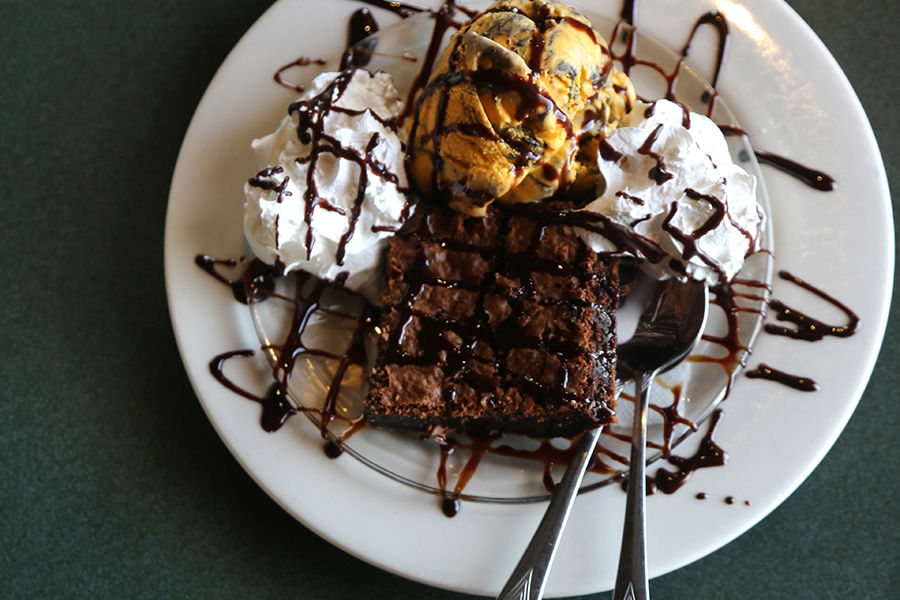
If you haven’t filled up on delicious brews and tasty burgers, save room for the Stout Brownie Sundae. The chefs make this speciality item with Oil Change Oatmeal Stout, and served with a side of Mizzou-made Arbuckles ice cream, whipped cream and chocolate sauce. Diners can choose from Mizzou Gold, Tiger Stripe or the flavor of the week. The dessert is served on a massive plate, so this dish is great for sharing if you’re feeling particularly generous.
Executive chef Mike Arnall, who has been at Flat Branch since 2008, says the decadent brownie was on the menu before he started and might be one of the original desserts from the restaurant’s opening 21 years ago.
The process starts with a standard brownie recipe mixed with the Oil Change stout, one of Flat Branch’s core eight beers served throughout the year.
Kyle Butusov, Flat Branch’s head brewer, says the stout has a smoky, coffee, chocolaty taste. The beer is used in the stout brownie to complement those flavors.
The moist brownie is rich as fudge and mildly sweet. Oil Change Oatmeal Stout is thick and bitter like coffee, so the combination resembles dark chocolate. The local ice cream brings texture and sweetness to the whole platter. Beer and brownies: Who knew this unlikely combination could taste so good?
— Claire Lardizabal
Stout Brownie Sundae | Flat Branch Pub | 449-0400 | 115 S. Fifth St. | $5.99
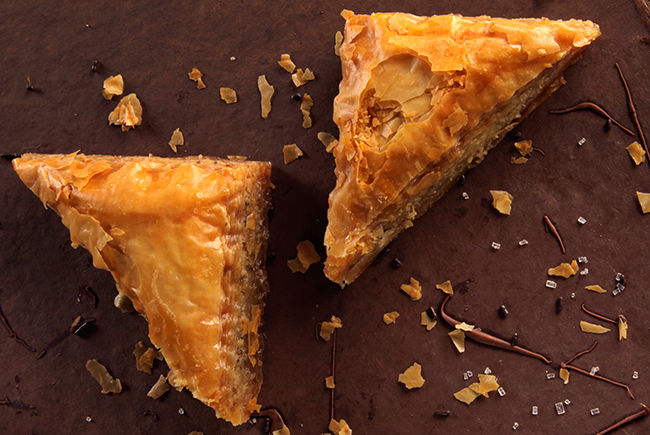
Baklava is a traditional Middle Eastern pastry made of thin phyllo dough, honey and walnuts. Coffee Zone Manager Issan Yanis says the restaurant used to make homemade baklava until it got too time-consuming to make on site, but he continues to make it at home for his family. He describes it as a “crunchy, sweet dessert filled with nuts.”
The standard recipe Yanis uses requires individually stacked layers of phyllo dough, each brushed with melted butter. Then a filling mixture of finely crushed nuts, sugar and cinnamon is added before repeating the process on top. Baklava is pre-sliced before going into the oven at 350 degrees and baked until golden brown. A honey drizzle tops the dish to create a sweet, sticky finish.
When baked, the phyllo dough puffs up and becomes delicate and crispy. Honey and crushed nuts add a candy-like sweetness similar to peanut brittle or toffee. Make sure to sit down and enjoy your baklava, as each bite comes with a sea of phyllo flakes. You’ll want to keep some napkins on hand.
Osama Yanis, Coffee Zone owner and Issan’s brother, says he likes to eat baklava in the morning with a cup of coffee.
— Claire Lardizabal
Walnut Baklava | Coffee Zone | 449-8215 | 11 N. 9th St. | $2.80
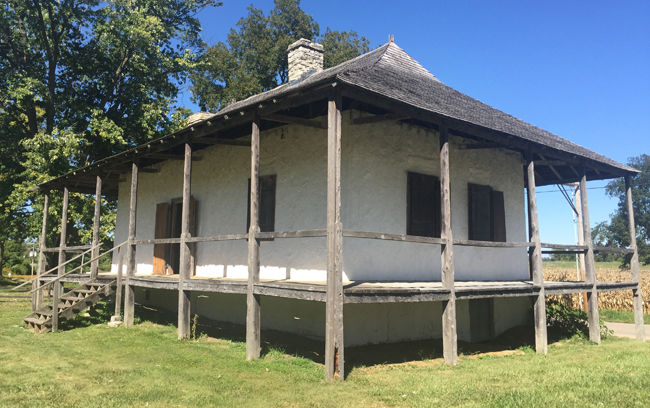
The Bequette-Ribault house charms and intrigues visitors with its history and might become a part of a national park plan in the works.
Currently, plans are being vetted to make the Ste. Genevieve area a national park. Bequette-Ribault falls within the boundaries and, if passed, will join other national historic sites in Missouri.
The area’s unique story begins with French colonials establishing Ste. Genevieve in the 1750s. In 1808, Jean-Baptiste Bequette, Sr. built the house. In 1840, a freed slave named Clarisse bought the Saxon-style house for $405 with the help of a French aristocrat named Jean Ribault, an acquaintance of Bequette. Clarisse then had two children who bore the last name, Ribault. The family continued to own the home until 1969 when her descendant Alonzo Ribault passed away.
In 2014, Hank Johnson, Chaumette Vineyard and Winery owner, sought to complete an unfinished rehabilitation project of Bequette-Ribault begun in the 1980s. Johnson hails from a French background and ties his ancestry to architecture, as seen at Chaumette Winery and Bequette-Ribault. The property, now open as a museum, offers an adjacent hospitality room, which was once a chicken coop. Visitors can view a historical timeline sketched along the wall.
Doug Sparks, Delta Stone and Marble owner and part-time rehabber, did much of the restoration work on the house, using white cement, glue and water to restore the white washed limestone walls. The farm originally sat on 30 acres of land that grew corn, sorghum, pecans and had a moonshine still at one point.
Two unique features of the house are the Norman truss and French poteaux-en-terre vertical post construction. According to the Bequette-Ribault website, the house is one of only five houses in the United States made in this French colonial style.
The rooms are aglow from the gold-straw cornfields outside the walnut windows. Hardwood floors run through the first floor, a ladder stretches through the ceiling into the loft above, and all furniture dates from the 1800s to reflect what the home would have looked like during the era.
Ste. Genevieve is among a collection of small towns that represents Missouri’s very own wine country. Bequette-Ribault is a stop not to miss.





 clairelardizabal.com